Price comparison only helps after the authority and buyer status are right. A cheap resident Fish & Game fee does not help an angler who does not meet Fish & Game's resident definition, a Fish & Game visitor fee does not cover Taupo, and a DOC Taupo fee does not cover Fish & Game waters outside the district.
Start with authority and status
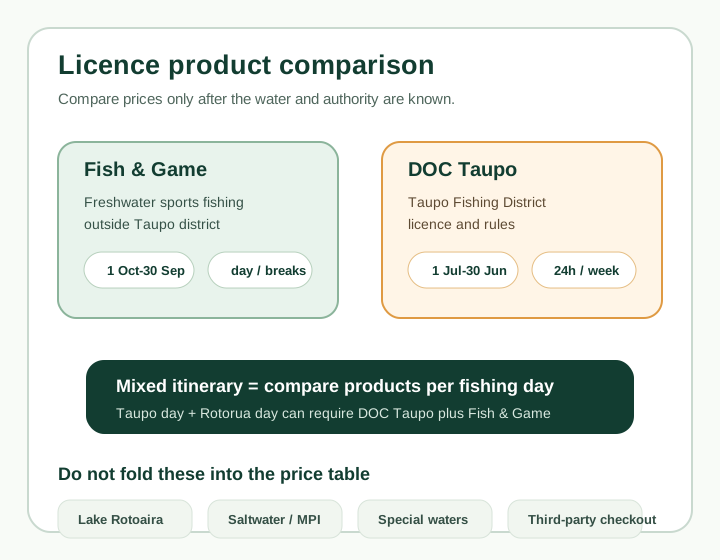
The table above shows the main licence authorities, coverage notes, and adult starting prices checked here. Read it as a sorting tool, not as a checkout instruction.
Before comparing fees, answer these questions in order:
| Question | Why it changes the fee |
|---|---|
| Is the fishing freshwater sports fishing or saltwater fishing? | MPI marine rules can apply without a Fish & Game or DOC freshwater licence |
| Is the freshwater day inside the Taupo Fishing District? | Taupo uses DOC products, not Fish & Game products |
| Does Fish & Game treat the buyer as resident or non-resident? | Resident products are eligibility-limited; anglers outside that definition use non-resident products |
| How many Fish & Game fishing days are planned? | Day products can be cheaper for short trips, while season products can overtake them |
| Is a designated water or special rule involved? | Some waters need extra checks before the cheapest product is usable |
The cheapest legal option is the cheapest product that matches all five answers.
If the question is simply "what does a New Zealand fishing licence cost?", start with the licence cost guide. If the question is how many Fish & Game visitor days make the season product cheaper, use the non-resident day vs season break-even before applying the broader resident-vs-visitor comparison here.
Adult price gaps that affect planning
Current checked prices show four useful adult comparisons. These are planning numbers; the official pages still control the active product and fee at purchase time.
| Comparison | Calculation | Planning result |
|---|---|---|
| Fish & Game resident adult season vs non-resident adult season | NZ$270 – NZ$156 | The non-resident season example is NZ$114 higher |
| Fish & Game non-resident adult day licences vs non-resident adult season | NZ$270 / NZ$38 | The season example starts to beat day licences on the 8th Fish & Game day |
| DOC Taupo non-resident adult 24-hour vs DOC Taupo non-resident adult week | NZ$89 / NZ$23 | The week example starts to beat 24-hour licences on the 4th Taupo day |
| DOC Taupo non-resident adult week vs DOC Taupo non-resident adult season | NZ$169 – NZ$89 | The Taupo non-resident season example is NZ$80 more than the week product |
Treat these numbers as season-bound examples. Fish & Game prices can change at season rollover, DOC Taupo products follow the 1 July licence-year cycle, and the official store is the authority at checkout.
For a non-resident adult fishing Fish & Game waters, seven one-day licences would total NZ$266. The whole-season non-resident example is NZ$270, so the season product becomes better value from the eighth Fish & Game fishing day. That break-even does not apply to Taupo because Taupo uses DOC licence categories. For the broader duration decision, including resident Short Break, Long Break, Winter, Taupo 24-hour, and Taupo week products, use the day vs season comparison.
Licence years also differ. Fish & Game whole-season products run on the Fish & Game season, while Taupo products follow the DOC Taupo licence year. If a trip sits near 1 July, 1 October, or the end of September, check the licence season dates guide before treating two prices as interchangeable.
Resident Fish & Game products are eligibility-limited
Fish & Game's resident standard licence page is the official place to verify resident options such as adult, junior, child, family, local-area, day, short-break, long-break, and winter products. Start with the core comparison before checking every product.
The resident adult whole-season example in the table above is useful only if the buyer meets Fish & Game's resident eligibility wording. Do not choose a resident product merely because the angler is physically in New Zealand for the trip.
Local Area licences also need careful reading. They can be good value for a resident who fishes one nominated region, but they are a poor comparison point for a road trip that crosses several Fish & Game regions.
Visitor Fish & Game products depend on fishing days
Fish & Game's non-resident licence page is the official fee source for anglers who do not meet Fish & Game's resident definition and are fishing Fish & Game freshwater outside Taupo. For one or two fixed Fish & Game days, the non-resident day product can be the relevant comparison. For longer trips, compare the total day-licence cost against the non-resident season product.
Day products are not a universal shortcut. Fish & Game guidance notes limits around designated waters, and regional Anglers' Notices can still control open waters, methods, seasons, bag limits, size limits, and other named-water conditions.
If the visitor trip includes both Taupo and Fish & Game waters, split the trip before comparing fees. Use the non-resident licence guide for the Fish & Game visitor side and the Taupo licence guide for DOC Taupo.
Taupo belongs to DOC, not the Fish & Game comparison
Taupo is a separate DOC decision. DOC's Taupo store and Taupo licence pages include 24-hour, week, and whole-season products, with resident and non-resident options that do not map cleanly onto Fish & Game's resident and non-resident structure. DOC also announced Taupo fishery rule changes for the 2026/27 season from 1 July 2026, so a Taupo price comparison should be paired with the current DOC rule page before fishing.
This matters when the trip crosses the central North Island. A non-resident adult might need only a DOC Taupo 24-hour product for one short Taupo day, a week product for several Taupo days, and a Fish & Game non-resident day or season product for freshwater outside Taupo. A New Zealand resident might still need to separate the DOC Taupo product from a Fish & Game season or Local Area product.
Lake Rotoaira should not be folded into either comparison casually. DOC treats it as a separate licence and regulation check, so use the Lake Rotoaira source before adding it to a Taupo plan.
If the comparison starts drifting
Resident-vs-non-resident fee searches often bring in neighbouring questions. Keep the next step tied to the actual uncertainty instead of stretching one price table across every licence problem.
| If the real question is | Better next guide |
|---|---|
| "How much is the licence?" | New Zealand fishing licence cost |
| "How many visitor days before a season licence wins?" | Non-resident day vs season |
| "Which duration fits a short mixed trip?" | Day vs season fishing licence |
| "Am I allowed to buy the visitor product?" | Non-resident fishing licence |
| "Does the trip include Taupo?" | Fish & Game vs Taupo DOC |
Special-water and saltwater checks
Fee comparison cannot decide access, closed waters, method restrictions, designated-water requirements, controlled fisheries, sea-run salmon conditions, boat-ramp fees, or saltwater catch rules.
Use Fish & Game regional regulations for Fish & Game waters, DOC Taupo rules for Taupo, DOC Lake Rotoaira guidance for Rotoaira, and MPI recreational marine rules for sea fishing. A price table can point you toward a product; it cannot replace the official rule page for the water.
Price comparison in real itineraries
| Trip plan | What to compare |
|---|---|
| One guided trout day outside Taupo | Fish & Game non-resident day product plus the regional rule notice |
| Three Fish & Game freshwater days | Non-resident day total against the non-resident season product |
| Resident fishing one local area all season | Resident whole season against Local Area terms |
| One Taupo day with no other freshwater | DOC Taupo 24-hour product against unnecessary longer DOC products |
| Taupo week with no other freshwater | DOC Taupo 24-hour total, week product, and season product |
| Taupo plus Otago rivers | DOC Taupo product plus the correct Fish & Game resident or non-resident product |
| Saltwater plus one freshwater day | MPI saltwater rules plus the relevant freshwater licence decision |
The comparison is useful when it mirrors the actual trip. If the trip changes, redo the fee comparison from the water and authority rather than trying to stretch the old answer.
Before paying
Open the official fee page for the product you are about to buy, confirm the buyer status, confirm the water authority, and then read the current rule page for that water. The better-value licence is the one that matches the person, the place, and the fishing days without leaving a rule check unresolved.