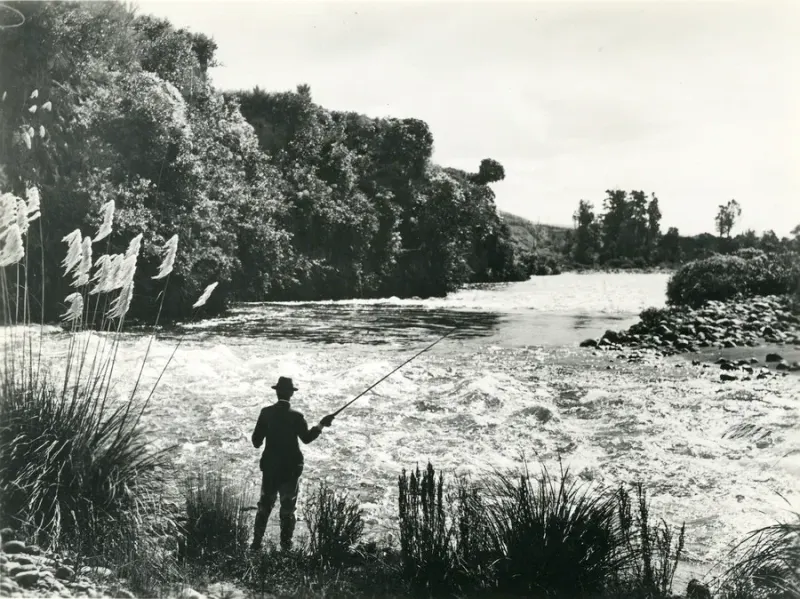
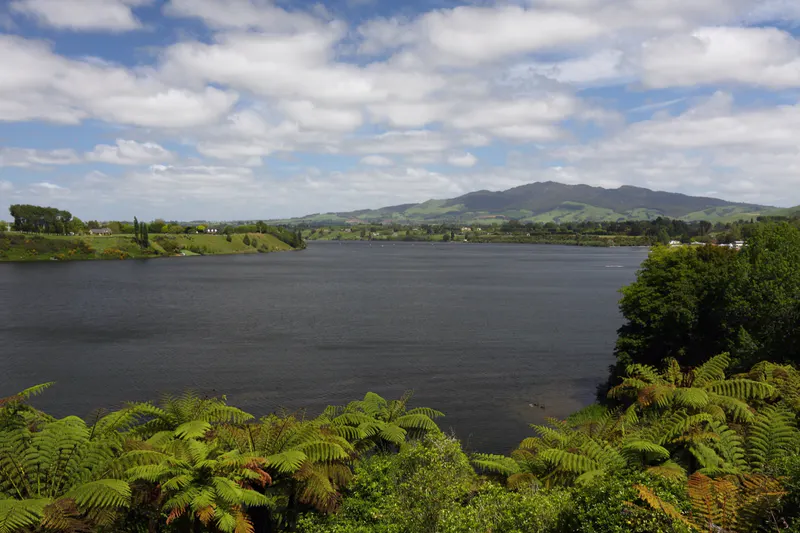
Northland freshwater fishing is a Fish & Game decision, but it should not be planned like a generic South Island trout trip. Warmer water, stocked reservoirs, smaller streams, land access, and nearby saltwater all make the current Northland regional notice part of the licence decision.
Northland licence setting
Northland is a Fish & Game freshwater region. For trout and other sports fish in Northland freshwater, start with the Fish & Game licence guide, choose the correct licence category, then read the current Northland Anglers' Notice before fishing.
The region is surrounded by coast, so the first planning question is often freshwater or saltwater. Harbour, beach, boat, and shellfish days belong under MPI marine rules. A stocked reservoir or trout stream belongs under Fish & Game. Mixed holidays can need both checks on different days.
Why Northland is different
Fish & Game's Northland material does not frame the region as a high-volume cold-water trout destination. It points anglers toward warmer-water constraints, stocked reservoirs, smaller streams, and access permission. That makes the licence decision inseparable from the current regional rules.
Summer water can run warm for trout, so timing matters. Reservoir fishing, cooler months, shaded stream reaches, and early or late day sessions may be more realistic than treating every Northland water as a summer trout default.
| Planning angle | Northland implication |
|---|---|
| Stocked reservoirs | Check the current reservoir notes, access, shoreline or boat limits, and stocking context |
| Small streams | Check the exact catchment and land access before travelling |
| Warm water | Cooler seasons and shaded water deserve more attention |
| Coastal itinerary | Switch to MPI rules for marine fish or shellfish |
| Visitor licence | Use non-resident Fish & Game products when residency requires it |
Reservoirs, rivers, and streams
Northland's strongest freshwater planning signal is regional rather than river-by-river. Fish & Game separates reservoir guidance from rivers and streams, which is a useful way to plan the trip. Reservoirs such as Wilson's Dam and Lake Manuwai need water-specific checks for access, fishing area, boating or shoreline details, and current rules. Rivers and streams around Dargaville, Kaikohe, Kerikeri, and Whangarei need catchment-specific access and season checks.
Those waters are worth covering together because the practical question is usually broader than one river name. A Northland trip often needs anglers to separate Fish & Game freshwater, MPI saltwater, access permission, warmer-water timing, and reservoir-specific notes before deciding whether the licence answer is complete.
| Northland water type | Examples to check | Best planning move |
|---|---|---|
| Stocked reservoirs | Wilsons Dam, Lake Manuwai | Pair the licence with current reservoir notes, access, stocking context, and any boat or shoreline condition |
| Rivers and streams | Wairua, Kerikeri, Kaihu, Waipapa, Whangarei-area streams | Check the named catchment, land access, season, method, and whether the day has shifted toward marine fishing |
| Warm-season trout planning | Reservoirs, shaded streams, cooler periods | Treat timing as part of the rule check, especially when warm water makes a trout plan less straightforward |
| Short-trip decision | What to check before buying |
|---|---|
| One Northland reservoir session | Check whether a one-day licence fits the exact date, then confirm access, method, and any reservoir-specific note |
| Visitor fishing several freshwater days | Start with the non-resident licence guide before comparing day and season products |
| Reservoir plus harbour or beach | Split the plan: Fish & Game for the freshwater session, MPI rules for the coastal session |
| Warm summer trout plan | Recheck the current Northland notice and Fish & Game seasonal guidance before assuming the water is practical for trout |
Water-specific rule checks
Open the current Northland Fish & Game regional regulations before fishing. Check the exact water, open season, permitted method, daily limit, and any local restriction. The regional overview can help choose a water, but the regulation notice is the working rule source for the day.
This is especially important for visitors who buy before finalising an itinerary. A Fish & Game licence can be the correct freshwater licence, but it does not decide whether the planned reservoir is accessible, whether a stream approach crosses private land, or whether a day that became marine fishing has left the Fish & Game system.
Access and conduct
Northland is one of the region pages where access deserves a direct warning. Official regional material says access to most rivers requires permission from the individual landowner before crossing property. Ask first, close gates, avoid disturbing stock, and use Fish & Game's Northland access map before leaving sealed roads.
Named examples help prevent overgeneralising the region. Waipapa, Kerikeri, Tirohanga, Whangarei-area streams, Wilsons Dam, and Lake Manuwai should each be treated as a water-specific check, not as proof that every nearby stream or reservoir has the same access or timing.
Reservoirs can feel simpler, but they still need water-specific checks. Confirm the public access point, any boating or shoreline limitation, and whether local signage changes the practical plan. A fishing licence does not replace those site-level requirements.
Border checks
Check Auckland/Waikato when travelling south. Check Taupo or the Taupo licence guide separately if the itinerary later reaches the DOC Taupo Fishing District. Use the freshwater and saltwater guide when a trip mixes coast, harbour, shellfish, and freshwater sports fishing.
Planning traps
Northland should not be treated as a summer trout default. Warm water can make timing important, and the official regional material points anglers toward cooler periods, reservoirs, and shaded water.
A licence does not give access to riverbanks. In Northland, permission before crossing private land is often the make-or-break practical step.
Saltwater and freshwater can sit on the same holiday without sharing the same rules. A harbour morning and a stocked-reservoir afternoon need different checks.
Do not treat every Northland water name as a separate licence problem. Until the exact water creates a different legal workflow, the stronger check is still one regional path: Fish & Game licence, current Northland notice, named-water access, and MPI only if the day becomes coastal.
Final check before fishing
- Confirm the water is freshwater sports fishing, not saltwater.
- Buy or confirm the correct Fish & Game licence category.
- Read the current Northland Anglers' Notice.
- Check reservoir, river, stream, method, and season details for the exact water.
- Confirm land access before crossing private property.
- Carry the licence, identification if required, and the official rule link.
A Northland plan is ready only when the freshwater licence, current regional notice, named water, land access, and seasonal water conditions all line up. If the day shifts toward the harbour or coast, switch the rule check to MPI before fishing.