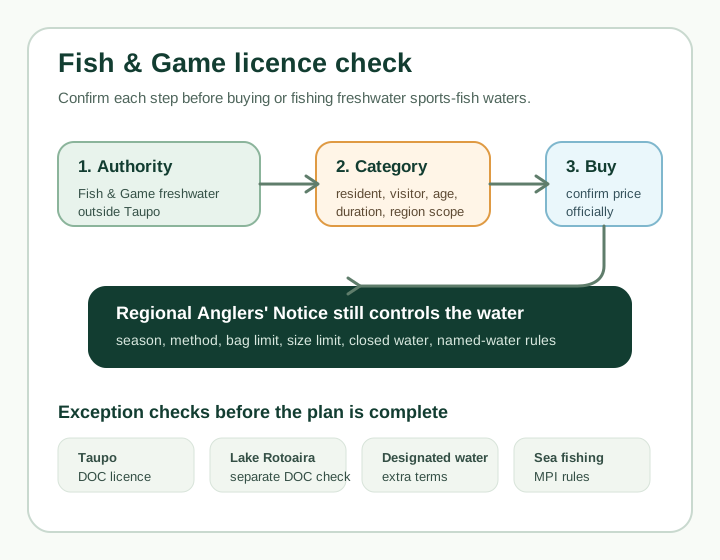
Designated Waters is Fish & Game's extra licence layer for named freshwater sports-fishing waters. It is not a broad South Island label. The decision starts with the exact water, then moves through the qualifying base licence, resident or non-resident designated-water product, and the current regional notice.
What Designated Waters decides
| Check | What it means |
|---|---|
| Exact named water | Designated status is water-specific, not region-wide |
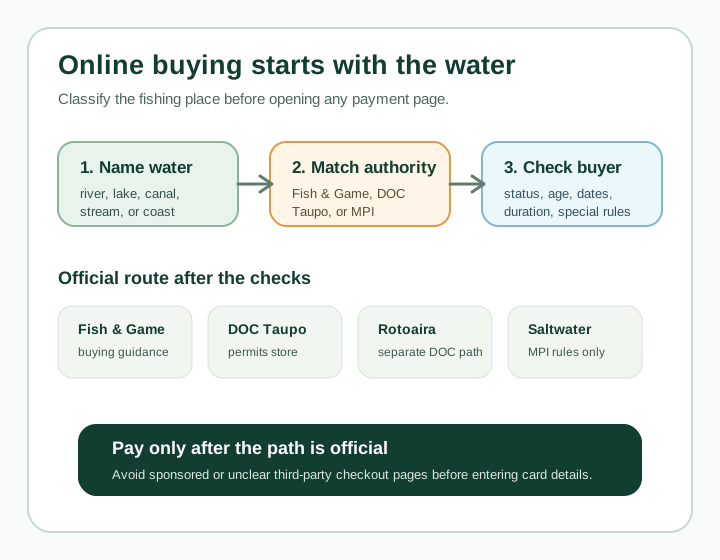
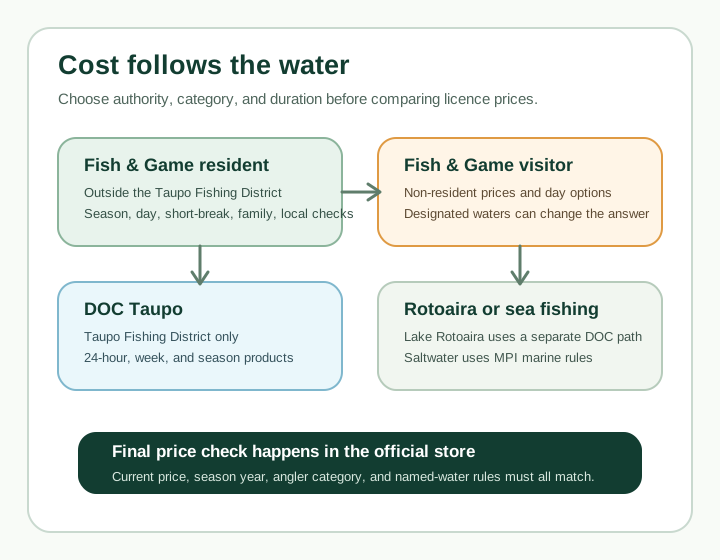
| Fish & Game authority | Taupo, Lake Rotoaira, and saltwater are separate rule systems |
| Qualifying base licence | Residents use qualifying whole-season Fish & Game products; non-residents need a whole-season non-resident licence first |
| Designated-water product | Resident and non-resident products differ |
| Current regional notice | Season, method, bag, size, access, and named-water conditions still apply |
| Controlled-fishery page | A booking or controlled-period rule can sit on top of the designated-water check |
Fish & Game's current notice allows resident qualifying whole-season options such as local area whole-season, standard whole-season, loyal senior whole-season, and family whole-season where the holder qualifies. The 2025 Sports Fish Licences, Fees, and Forms Notice took effect on 1 October 2025.
Resident and non-resident path
| Angler | Current Fish & Game path | Displayed price | Watch-out |
|---|---|---|---|
| Resident | Qualifying whole-season Fish & Game licence, then a Designated Waters season licence | NZ$5.00 | The base licence must be a qualifying whole-season product |
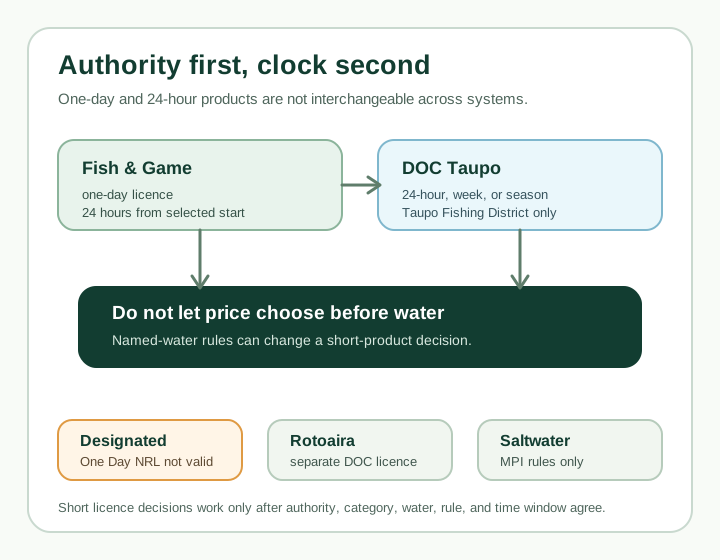
| Non-resident | Whole-season non-resident Fish & Game licence, then a Designated Waters day licence | NZ$40.00 per calendar day | One-day non-resident licence does not unlock designated waters; max five days per region |
The statutory fees in the 2025 notice are exclusive of GST; Fish & Game's consumer-facing prices are the figures above. The designated-water day licence is a calendar-day product, not a 24-hour product.
Current regions to check
Current designated-water regions are Wellington, Nelson/Marlborough, West Coast, North Canterbury, Otago, and Southland. Use the current designated-water page and the current regional notice for the exact water.
| Region | Example water or check |
|---|---|
| Wellington | Upper Rangitikei designated-water check |
| Nelson/Marlborough | Nelson/Marlborough names Travers River, Upper Wairau River, and Upper Matakitaki River |
| West Coast | West Coast should be checked for Karamea and Mokihinui before buying short visitor products |
| North Canterbury | North Canterbury designated-water list |
| Otago | Otago designated-water list |
| Southland | Upper Oreti backcountry fishery and Southland notice |
Region names are not enough. A road trip can cross one Fish & Game region, move into another named-water system, then end at Taupo or the coast. Reopen the current official page when the itinerary changes.
West Coast Karamea and Mokihinui
West Coast deserves more than a throwaway row because Karamea and Mokihinui are exactly the kind of names that can cause a wrong purchase. A non-resident planning a remote West Coast river day may see a cheap one-day licence first, but Designated Waters changes the sequence.
Before fishing Karamea, Mokihinui, or any West Coast water that appears on Fish & Game's current designated-water material, verify:
| West Coast designated water | Current official reach | Current rule position |
|---|---|---|
| Karamea River | Upstream of the Kakapo River confluence | 1 Oct-30 Apr, all legal methods, two sports fish, Designated Waters licence stack |
| Mokihinui River | Upstream of the Rough and Tumble Creek confluence | 1 Oct-30 Apr, all legal methods, two sports fish, Designated Waters licence stack |
This is a source check from 31 July 2026, not a permanent rule. Reopen Fish & Game's West Coast Designated Waters page and current regional notice before relying on the reach, season, method, or bag details.
| West Coast planning check | Why it matters |
|---|---|
| Exact water or reach | Do not stretch a designated-water label across a whole district by memory |
| Base licence | The designated-water product sits on top of a qualifying whole-season Fish & Game licence |
| Non-resident path | The one-day non-resident licence is not the right shortcut for designated waters |
| West Coast regional notice | Methods, seasons, limits, access, and named-water conditions still apply |
| Access and weather | Remote river access, rain, flow, and safety can stop a legal plan from being usable |
Lake Brunner is a useful caveat. It has its own Lake Brunner guide and named-lake rule row, but it should not be treated as a West Coast Designated Water unless the current official Fish & Game source changes. Karamea and Mokihinui need the designated-water check; Lake Brunner needs the lake-row check.
Designated waters are not controlled fisheries
Controlled fisheries are a separate Fish & Game permission path. They use booking, ballot, or controlled-period terms on some waters. If your water is named as a controlled fishery, open that official page as well. Designated Waters does not replace that workflow.
That separation matters because anglers often compress both ideas into one bucket. Keep the named-water designation check separate from any controlled-fishery booking or period check, then open the named controlled-fishery page only when the official source says that extra workflow applies.
Visitors and short trips
Visitors should not start with the cheapest day product. Start with the water. If the water is designated, confirm the whole-season non-resident path first, then the Designated Waters day licence. A one-day non-resident Fish & Game licence is not the shortcut for designated waters.
For broader visitor planning, the non-resident licence guide, non-resident day vs season comparison, and day or 24-hour licence guide help only after the named water is confirmed.
Before fishing a designated water
- Confirm the exact water is on the current designated-water list.
- Confirm it is Fish & Game, not Taupo, Lake Rotoaira, or saltwater.
- Confirm the qualifying whole-season base licence.
- Confirm the resident or non-resident designated-water path and day count.
- Read the current regional notice for method, season, bag, size, access, and named-water conditions.
- If the water also has a controlled-fishery page, open that page too.
- Carry proof of the licence stack and the official rule link.
Conclusion
Designated Waters is the extra step that sits on top of a named Fish & Game water when the official page says that water needs it. Once the exact water, base licence, designated-water path, and regional notice agree, the buying decision gets simple. If one of those pieces does not line up, stop and reopen the official source before paying or travelling.